

How Global Supply Chain Disruptions Are Impacting Warehousing in Malaysia—and Why a WMS Matters More Than Ever
Running a warehouse today feels very different compared to a few years ago.
Back then, things were more predictable.
Stock arrived on time. Demand was easier to plan. Operations were stable.
Today?
Everything feels uncertain.
Shipments get delayed. Costs fluctuate. Lead times change without warning.
And disruptions happening far away—across major global trade routes—are now affecting businesses right here in Malaysia.
For warehouse operators, this creates a new kind of pressure:
- You may receive stock later than expected
- Or suddenly receive too much at once
- Or struggle to fulfill orders due to missing items
In this environment, one thing becomes clear:
Warehouses can no longer rely on manual processes or guesswork.
This is where a warehouse management system (WMS) becomes more important than ever.

What’s Happening in Global Supply Chains?
Over the past few years, global supply chains have become more unstable.
Several factors contribute to this:
- Disruptions along major shipping routes
- Rising fuel and freight costs
- Changes in trade flow and demand patterns
- Ongoing geopolitical tensions affecting logistics networks
These issues may seem far away, but their impact travels quickly.
When shipping routes are affected:
- Transit times increase
- Costs rise
- Schedules become unpredictable
And eventually, this affects businesses locally.
How This Impacts Warehousing in Malaysia
For Malaysian businesses—especially importers, distributors, and eCommerce sellers—the effects are already visible.
Let’s break it down.
1. Unpredictable Inventory Arrival
Stock that used to arrive in 2–3 weeks may now take longer.
Or worse:
- Shipments arrive late
- Multiple shipments arrive at the same time
This creates challenges like:
- Overstocking
- Limited storage space
- Difficulty planning operations
2. Stock Shortages and Fulfillment Delays
When inventory is delayed:
- Orders cannot be fulfilled on time
- Customers experience delays
- Businesses risk losing sales
For sellers on Shopee and Lazada, this can lead to:
- Poor ratings
- Reduced visibility
- Lower conversion rates
3. Rising Storage and Holding Costs
To cope with uncertainty, many businesses:
- Order more stock as a buffer
- Hold extra inventory “just in case”
But this leads to:
- Higher storage costs
- Risk of dead stock
- Cash flow pressure
4. Increased Operational Complexity
Warehouse teams now need to handle:
- Irregular stock arrivals
- Fluctuating order volumes
- Constant adjustments
Without proper systems, this becomes overwhelming.
Why Traditional Warehouse Methods No Longer Work
Many warehouses still rely on:
- Excel spreadsheets
- Manual tracking
- Paper-based processes
These methods may have worked in stable conditions.
But in today’s environment, they create more problems.

1. Lack of Real-Time Visibility
With manual systems:
- Inventory is not updated instantly
- Stock data may be outdated
This leads to:
- Wrong decisions
- Stock discrepancies
- Delays in response
2. Slow Decision-Making
When data is scattered:
- Managers cannot react quickly
- Problems are discovered too late
In an unpredictable environment, speed matters.
3. Higher Risk of Errors
Manual processes increase:
- Picking errors
- Stock miscounts
- Incorrect shipments
And as costs rise, these mistakes become more expensive.
4. Difficulty Scaling Operations
As order volume grows:
- Manual systems cannot keep up
- Staff become overloaded
- Efficiency drops
The New Requirement: Control and Visibility
In today’s supply chain environment, warehouses need more than just storage.
They need:
- Real-time visibility
- Accurate inventory tracking
- Faster decision-making
- Flexible operations
In simple terms:
👉 You need control.
And this is exactly what a WMS provides.
How a WMS Helps You Stay in Control
A warehouse management system (WMS) is not just a tool—it is a control center for your operations.
Let’s look at how it helps in today’s challenging environment.
1. Real-Time Inventory Visibility
You always know:
- What stock you have
- Where it is located
- How much is available
This helps you:
- Avoid stockouts
- Prevent over-ordering
- Make better decisions
2. Better Handling of Unpredictable Stock Arrival
When shipments arrive unexpectedly:
- You can quickly update inventory
- Allocate space efficiently
- Process inbound stock faster
No more confusion or delays.
3. Improved Order Fulfillment Accuracy
A WMS guides your team during picking and packing:
- Clear instructions
- Barcode verification
- Reduced human error
This ensures:
- Correct items
- Faster processing
- Fewer returns
4. Centralized Order Management
Orders from multiple channels can be managed in one system.
Whether from:
- Shopee
- Lazada
- Website
Everything flows into a single platform.
5. Faster Response to Changes
When conditions change:
- Stock delays
- Sudden demand spikes
You can react quickly with accurate data.
Where 8Stock Fits In
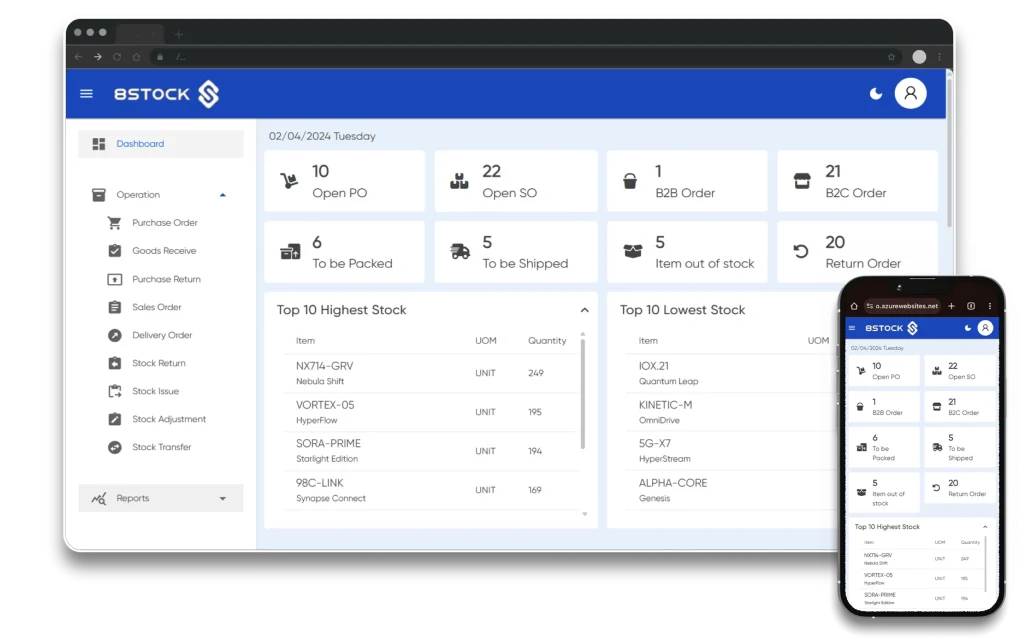
In situations like this, the goal is not just to work harder.
It is to work smarter with better systems.
A WMS like 8Stock helps Malaysian businesses:
- Gain real-time visibility over inventory
- Reduce dependency on manual processes
- Improve accuracy across operations
- Handle fluctuations with more confidence
Instead of reacting to problems, you stay in control.
Real-Life Scenario: Before vs After Using a WMS
Let’s look at a simple example.
Before:
A distributor in Selangor:
- Tracks inventory using Excel
- Faces delayed shipments
- Struggles with stock planning
Problems:
- Overstocking some items
- Running out of fast-moving products
- Frequent order delays
After Implementing a WMS:
- Real-time inventory tracking
- Better stock visibility
- Organized warehouse layout
Results:
- Improved stock planning
- Faster fulfillment
- Fewer errors
Same business.
Better control.
Practical Steps You Can Take Today
Even before implementing a full system, you can start improving.
1. Review Your Inventory Accuracy
Check:
- Are your stock records reliable?
- How often are they updated?
2. Identify Bottlenecks
Look at:
- Receiving delays
- Picking inefficiencies
- Packing slowdowns
3. Standardize Processes
Ensure:
- Clear workflows
- Consistent practices
4. Reduce Manual Work
Where possible:
- Automate tracking
- Use scanning tools
5. Plan for Uncertainty
Expect:
- Delays
- Fluctuations
Build flexibility into your operations.
Signs Your Warehouse Needs a WMS
You may need a system if:
- You rely heavily on Excel
- Inventory is often inaccurate
- Orders are delayed or incorrect
- Staff spend time searching for stock
- Operations feel reactive instead of controlled
These are clear signals.
Final Thoughts
Global supply chain disruptions are no longer rare events.
They are becoming part of daily business reality.
And while you cannot control what happens globally,
you can control how your warehouse responds.
In today’s environment:
- Visibility is critical
- Accuracy is essential
- Speed is a competitive advantage
Warehouses that rely on manual processes will struggle to keep up.
Those that invest in better systems will adapt faster, operate more efficiently, and stay competitive.
Solutions like 8Stock are designed to support this shift—helping businesses move from uncertainty to control.