
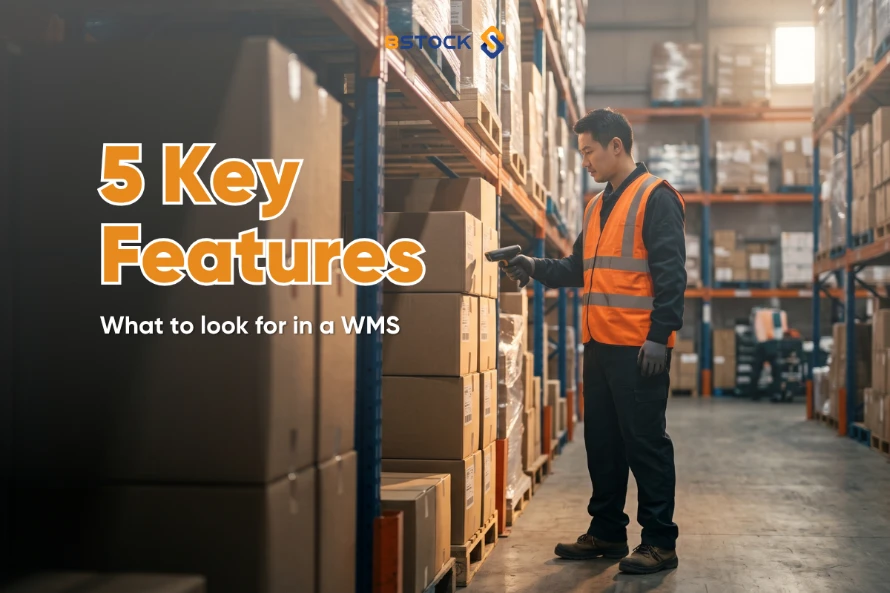
The key features of a proper warehouse management system are real-time multi-location inventory, multi-channel order sync, item-level tracking, integrated delivery handling, and exportable reporting — without all five, you’re not really running a WMS, just a fancier spreadsheet. If you’re comparing systems for a Malaysian business, here’s what each feature should actually do, and how to tell a real one from a shallow one.
A proper WMS gives you:
- Real-time inventory across every location,
- Orders synced automatically from Shopee, Lazada, WooCommerce and other channels,
- Item-level tracking by batch, serial or barcode,
- Integrated delivery and consignment-note handling, and exportable stock reports.
Miss any one of these and you’re back to manual workarounds — which defeats the point of buying a system.
Table of contents
What Actually Makes a Warehouse Management System “Good”?
Most Malaysian sellers don’t outgrow spreadsheets all at once — it happens feature by feature. First the stock count drifts because two people are updating the same sheet. Then a Shopee order gets missed because it’s not on the same screen as the Lazada orders. Then a customer asks where their delivery is and nobody can say for sure.
A system only earns the name “warehouse management system” if it closes all of those gaps at once. A tool that does inventory counts but doesn’t sync marketplace orders isn’t a WMS — it’s a nicer spreadsheet. The five features below are the ones worth checking before you commit to any platform.
(Still deciding whether you need a full WMS or just better inventory software? See the pros and cons of different inventory management approaches.)
The 5 Key Features to Look For
1. Real-Time Inventory Tracking
Stock should update the moment it moves — not overnight, not on a scheduled sync. If you run more than one storage location, or even just a front store and a back store, you need one screen that shows accurate totals across all of them, with the ability to transfer stock between locations without losing track of it.
Read more on optimize order fulfillment with the best WMS
2. User-Friendly Interface
If you sell on Shopee, Lazada, WooCommerce, or run your own site, orders from every channel should land in one queue automatically — not get copied by hand from each dashboard. This is the single biggest cause of overselling: two channels both “sell” the last unit because nothing told them it was gone.
3. Growth Adaptability
For FMCG, food, or anything with an expiry date, you need batch or serial tracking to manage stock rotation properly (FEFO/FIFO). Even outside FMCG, barcode-level tracking and proper SKU management — including multi-unit-of-measure and UPC handling — cuts manual counting errors as your product range grows.
4. Advanced Reporting and Analytics
Once an order is picked and packed, the system should hand it off cleanly: multi-channel delivery tracking, real-time updates from your shipping provider, and consignment notes generated automatically rather than typed out per parcel.
5. Integration Capabilities
You should be able to pull daily, monthly, quarterly or yearly stock-take reports, export them to Excel, and filter by date — without asking someone to compile it manually. A real-time dashboard that doesn’t require technical skill to read is what makes this usable day-to-day, not just at month-end.
| Feature | Why it matters for a Malaysian SME | 8Stock module |
|---|---|---|
| Real-time multi-location inventory | Stops stock counts drifting across outlets/warehouses | Warehouse Management |
| Multi-channel order sync | Prevents overselling across Shopee/Lazada/WooCommerce | Order Management |
| Item-level tracking (batch/serial/barcode) | Enables FEFO/FIFO for FMCG and expiry-sensitive stock | Inventory Management |
| Integrated delivery handling | Consignment notes + real-time shipping updates | Delivery Management |
| Exportable, date-filtered reporting | Stock-take reports without manual compiling | Report Management |
How 8Stock Delivers All Five
These five features map directly to 8Stock’s core modules — Warehouse, Inventory, Order, Delivery and Report Management — rather than being scattered add-ons. In practice, that means a Klang Valley seller running a Shopee/Lazada mega-sale sees the same stock number everywhere: on the warehouse floor, in the order queue, and on the report their finance team pulls afterward. Orders sync from Shopee, Lazada, WooCommerce and nopCommerce automatically; deliveries connect with GDEX; and reporting connects with AutoCount, so stock movements don’t need to be re-entered into accounting by hand.
If you’re comparing this against what you’re using today — or against a plain spreadsheet — the fastest way to see it is to walk through your own stock and orders with the team.
Request a Demo → · WhatsApp us at +60 12 381 1376
See the full platform: 8Stock’s warehouse management solutions
FAQ
What features should a small business look for in a warehouse management system? At minimum: real-time multi-location inventory, marketplace order sync (Shopee, Lazada, WooCommerce), item-level tracking by batch or barcode, integrated delivery handling, and exportable reporting. Missing any of these means you’ll still be doing manual work to fill the gap — which is exactly what a WMS is supposed to remove.
Does a WMS need to integrate with Shopee and Lazada? For any Malaysian business selling on more than one channel, yes. Without marketplace sync, orders and stock levels have to be reconciled by hand across platforms — which is exactly where overselling and stockouts happen. 8Stock syncs Shopee, Lazada, WooCommerce and nopCommerce automatically.
Is item-level tracking necessary for a small warehouse? It depends on what you sell. FMCG, food, or anything with expiry dates needs batch or serial tracking to manage FEFO/FIFO correctly. Even without expiry concerns, barcode-level tracking reduces manual counting errors as your SKU count grows.
Does 8Stock integrate with AutoCount for accounting? Yes — 8Stock connects with AutoCount so stock movements and reports don’t need to be manually re-entered into your accounting system. It also integrates with GDEX for shipping and consignment notes, keeping fulfilment and finance in sync.
How much does a WMS with these features cost in Malaysia? Pricing depends on your business size, number of users, and modules needed. 8Stock doesn’t publish a flat rate — request a free demo and the team will walk you through pricing based on your actual operations.
Ready to see these five features running on your own stock data? Request a Demo or WhatsApp +60 12 381 1376. Explore the full platform at 8Stock’s warehouse management solutions.