
Malaysia’s halal exports just hit a massive RM61.8 billion recently, and if you’re looking at the projections for 2030, the global demand is exceeding US$2.7 trillion! That is a ridiculous amount of money on the table. If you are a business owner, warehouse manager, or in procurement, you need to understand that running a halal supply chain in 2026 is about way more than just checking ingredients.
It requires strict JAKIM halal requirements, serious digital traceability, and operations that run smoother than butter. Let’s be honest, trying to figure out compliance while keeping costs down can feel overwhelming. This guide is going to walk you through the actionable steps you need to integrate sustainability and tech for a competitive edge.
Understanding 2026 Halal Supply Chain Regulations in Malaysia
We have to talk about the rules before we talk about strategy. By 2026, the landscape for halal logistics compliance is going to look a bit different. The National Halal Policy updates are pushing for tighter controls, especially regarding how data is managed across the chain.
It is not enough to just trust your supplier’s word anymore. JAKIM certification 2026 standards are placing a heavier emphasis on the entire ecosystem, from the warehouse floor to the delivery truck. You need to be aware that requirements for animal-based products are becoming mandatory for logistics providers, not just an optional “nice-to-have.”
Differences from global standards (e.g., Indonesia BPJPH)
If you are exporting, you might be confused about how Malaysia compares to neighbors like Indonesia. It’s tricky because BPJPH vs JAKIM standards don’t always align perfectly.
| Feature | JAKIM (Malaysia) | BPJPH (Indonesia) |
|---|---|---|
| Focus | Voluntary for logistics (except animal products), highly recognized globally. | Mandatory for most sectors, phased in by Oct 2024. |
| Recognition | High acceptance in Middle East & Commonwealth. | Gaining traction but strict local requirements. |
| Audit Style | Focus on process flow & halal facility audit. | Focus on administrative compliance & local partnership. |
You need to know these differences to handle halal export growth Malaysia effectively without getting your cargo stuck at customs.
Step-by-Step JAKIM Halal Certification Process
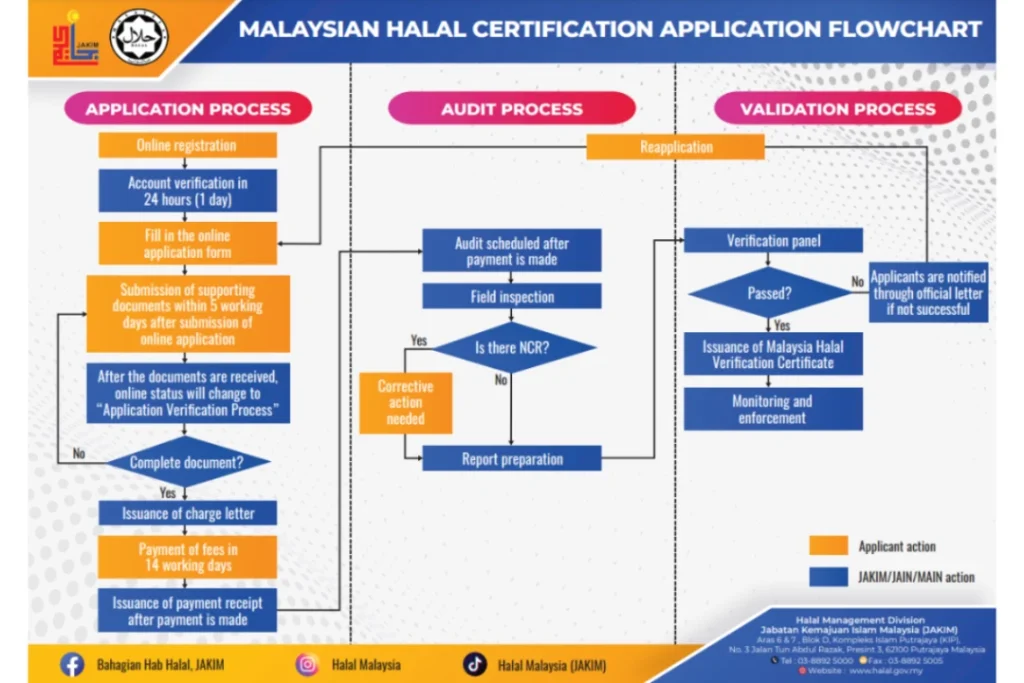
Getting certified isn’t as scary as people make it out to be, but it is tedious. First, check your eligibility; your business needs to be registered with SSM and operational for at least 3 months. You also must ensure that you deal exclusively with halal products if you want the full facility certified.
The halal certification process usually takes between 3 to 6 months. This timeline depends heavily on how organized your documents are. You will need ingredient lists, process flowcharts, and supplier declarations ready to go before you even click “submit” on the MYeHALAL system.
On-site inspection checklist
Once you pass the document stage, the auditors are coming to visit. You need to prepare your facility to avoid silly mistakes.
- Physical Separation: Ensure there is a clear physical barrier between halal and non-halal items if you handle both (though dedicated is better).
- Sanitation: Halal pest control records must be up to date and free from non-halal poisons.
- ** signage:** Clear labels indicating halal storage standards in specific zones.
- Ritual Cleansing: Proof of sertu (ritual cleansing) if the facility was previously used for non-halal animal products.
Implementing Halal Compliance in Warehousing and Storage
This is where the rubber meets the road for warehouse managers. Halal warehouse management is primarily about preventing cross-contamination prevention. You cannot just stack a pallet of certified cookies next to non-halal gelatin and hope for the best.
It feels kinda stupid to say this, but you need dedicated tools for halal zones. Forklifts and pallet jacks used in halal storage standards zones should be marked and never taken to non-halal areas. By 2026, many smart warehouses will be using Industry 4.0 halal tech to monitor this automatically.
Worker requirements and training
Your team is your first line of defense. You need to have a specific halal worker training program in place.
- Muslim Supervisor: You are required to have at least one Muslim supervisor to oversee halal integrity.
- Prayer Space: Adequate Muslim prayer facilities must be provided for staff.
- Competency: Regular training on why certain handling procedures matter (it’s not just rules, it’s religious observance).
Halal Logistics and Transportation Best Practices
Moving goods is where things often go wrong. Halal logistics compliance means the integrity of the product must be maintained during transit. If you are using third-party logistics (3PL), you need to ensure they are on the same page.
For cold chain items, this is critical. Halal cold chain integrity prevents spoilage, which can actually render a product non-halal (thoyyiban aspect) if it becomes harmful to consume. Dedicated halal transport vehicles are the gold standard here to ensure zero contamination.
Digital tools like HIAS for real-time tracking
It is almost 2026, so manual logbooks should be in the trash. You need digital halal traceability.
- HIAS System: The HIAS system DagangHalal is a great example of connecting the dots.
- Real-time Alerts: Know exactly when a shipment was opened or if the temperature spiked.
- B2B Compliance: These platforms help prove to your buyers that the chain was never broken.
Procurement Strategies for Halal Supply Chains

For the procurement guys reading this, your job is to be the gatekeeper. Halal procurement strategies start with vetting. You can’t build a halal product if your raw materials are questionable.
You need to establish a strict supplier halal verification process. Don’t just take a PDF certificate at face value; verify it against the JAKIM or recognized foreign halal certification body lists. With Malaysia halal exports growing, your supply network needs to be resilient enough to handle volume spikes without compromising standards.
Risk mitigation for SMEs
If you are a smaller player, this might sound expensive. SME halal compliance is tough, but there are ways to manage it.
- Use cloud-based inventory systems to track expiration and certificates.
- Look for government grants that support digitalization in the halal sector.
- Pool logistics resources with other halal-certified SMEs to lower costs.
Leveraging Technology and Sustainability in 2026
We are moving toward a world where sustainability and halal go hand-in-hand. Sustainable halal logistics is becoming a massive trend because “Halal” and “Thoyyiban” (wholesome) align with being eco-friendly.
Using AI halal governance tools can help you predict demand and reduce waste. Blockchain is another buzzword, but it actually works here for halal transparency blockchain ledgers. It allows a customer to scan a QR code and see the entire journey of their beef or cosmetics.
Integration with Industry 4.0
The warehouses of 2026 will rely heavily on automation.
- Smart Sensors: IoT devices that monitor humidity and pest activity automatically.
- Automated Sorting: Robots that ensure halal packaging standards are met without human error.
- Data Analytics: Using data to prepare for halal logistics awards and prove your excellence to the market.
Final thoughts
Running a halal supply chain in Malaysia in 2026 hinges on securing that JAKIM certification 2026, adopting digital halal traceability, and sticking to robust warehousing protocols. If you want to tap into that RM61.8 billion export potential, you can’t cut corners.
Warehouse managers and procurement execs who embrace these changes now will be the leaders of the pack. Start your audit today, verify those suppliers, and look into digital tools to handle your inventory. If you are struggling to manage your stock and keep track of all these compliance requirements, you might want to request a demo from 8Stock to see how we can streamline your operations.
Good luck getting your operations 2026-ready!
FAQs
1. What are the must-haves for halal warehouse certification in Malaysia? You absolutely need dedicated storage areas, strict halal pest control, protocols for cross-contamination prevention, and at least one Muslim supervisor on the floor.
2. How long does JAKIM halal certification take for logistics firms? Generally, it takes about 3 to 6 months. This depends heavily on how fast you can provide documents and clear the halal facility audit.
3. Can foreign halal certs work for Malaysian supply chains? Only if they are on JAKIM’s list of recognized foreign halal certification bodies. If they aren’t on the list, the cert is basically useless here.
4. What digital tools help with 2026 halal traceability? Platforms like the HIAS system DagangHalal are leading the way. They offer AI-enabled tracking that simplifies compliance.
5. Is halal certification mandatory for Malaysian logistics? It is highly advised for exports to Muslim countries. However, it is becoming mandatory for logistics providers handling animal-based products under the new regulations.