
Running a small business in Malaysia right now is tough! You’re probably juggling Shopee orders, TikTok Shop live streams, and managing a tiny store (small office home office), trying to keep track of your stock.
But don’t worry, because looking ahead at the warehouse management trends for 2026 can actually help you survive this mess. From smart forecasting tools to affordable automation, there are highly practical ways to speed up your click-to-ship time. This guide will show you how to optimize your operations without burning through your limited cash!
What Are the Top Warehouse Management Trends for SMEs in 2026?

AI and Machine Learning Integration
You might think artificial intelligence is only for massive corporations, but AI warehouse Malaysia tools are becoming much cheaper. Predictive analytics can be used by small sellers to guess exactly what items will sell out during the next Payday sale. This means less dead stock sitting on your shelves taking up expensive Klang Valley rental space.
- Demand forecasting AI tells you exactly how many units to restock before a flash sale hits.
- Smart tracking stops you from accidentally overselling on Lazada when an item is already gone on Shopee.
- Real-time decisions are made automatically, so you don’t have to stare at Excel sheets till 2 AM.
Rise of Cloud-Based WMS
Moving away from whiteboards and clunky spreadsheets is an absolute must. A cloud WMS SMEs can afford usually runs on a simple monthly subscription, which fits perfectly into tight budgets. It connects all your different sales channels into one single, easy-to-read screen.
- Scalable WMS solutions grow with you as your revenue finally crosses that RM300,000 ceiling.
- Multi-location tracking helps if you keep some stock at home and some at a rented shop-lot.
- Fulfillment becomes a breeze when your systems actually talk to each other without crashing.
Sustainable Practices
Going green isn’t just about saving the planet anymore. Practical green warehouse practices are actually helping businesses cut down their monthly electricity bills. Plus, buyers on TikTok really like it when their parcels arrive in eco-friendly wraps.
- Using energy-efficient LED lighting in your storage room noticeably lowers your TNB bills.
- Sustainable warehousing includes switching to recyclable packaging materials that cost almost the same as plastic.
- Small solar setups can be installed by shop owners to offset daytime operations costs.
How Can SMEs Affordably Adopt Warehouse Automation?
Autonomous Mobile Robots (AMRs) and AGVs
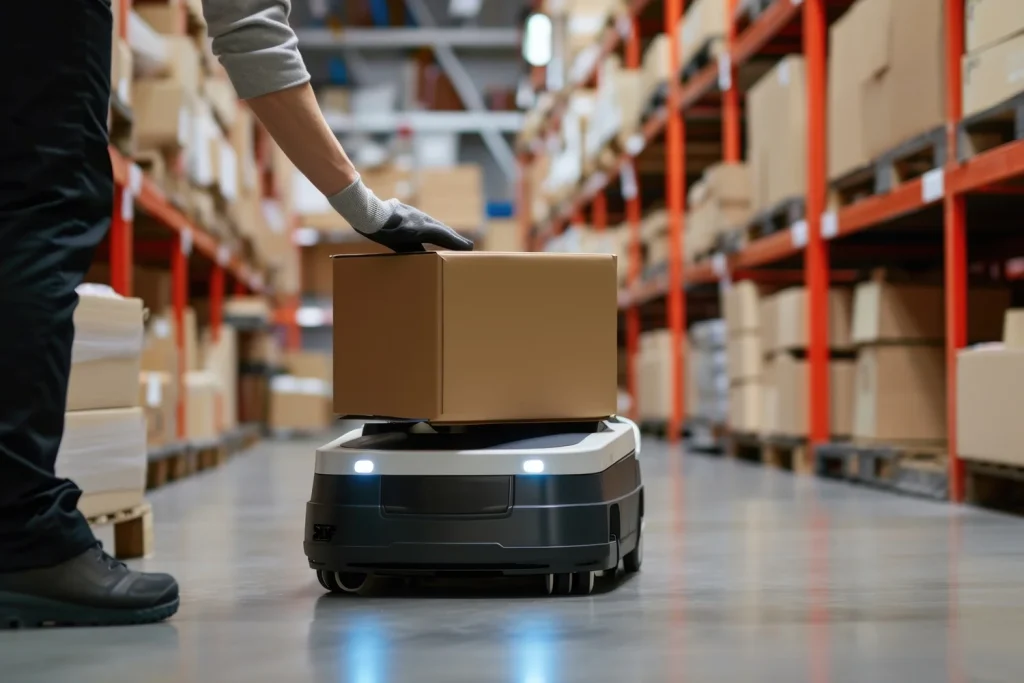
Robots sounding too expensive? Actually, SME warehouse automation costs are dropping fast because you can now rent these machines on a monthly basis. An AMR just moves heavy carts around your store so your staff don’t have to walk so much.
| Feature | Automated Guided Vehicles (AGV) | Autonomous Mobile Robots (AMR) |
|---|---|---|
| Setup | Needs fixed tracks on the floor | Learns your layout via sensors |
| Cost | High upfront setup fees | Lower subscription options available |
| Best for | Big factories with lots of space | Tight shop-lots with messy aisles |
Understanding these AGV AMR differences is important before you sign any vendor contracts.
Edge Computing and 5G
Slow internet can ruin your inventory sync during a major 11.11 sale event. With 5G warehouse connectivity, your hand scanners update stock numbers instantly without any annoying lag. The data is processed right where you are, which is exactly what edge computing means.
- Real-time inventory tracking stops customers from buying out-of-stock items and leaving bad reviews.
- An edge computing warehouse setup processes data fast, even in busy urban areas like Petaling Jaya.
- No more waiting for the spinning wheel of death on your seller dashboard.
Micro-Fulfillment Centers
Renting a massive warehouse in Shah Alam is simply too pricey for a micro-enterprise. Instead, micro fulfillment centers are tiny storage spaces hidden right inside residential neighborhoods. They keep your best-selling items closer to your customers for much faster shipping.
- You can offer “Same Day Delivery” easily to customers living in KL or Selangor.
- Transport costs are cut down because the travel distance to the sorting hub is much shorter.
- It reduces the headache of managing one giant, messy storage room by splitting your stock logically.
Which Technologies Offer Best ROI for Malaysian SMEs?
IoT and RTLS
Losing items in your own storeroom is frustrating and wastes a lot of money. Using IoT warehouse sensors helps you pinpoint exactly which box has the phone cases you need right now. This is a very practical way to fix your daily picking errors.
- RTLS logistics acts like a mini GPS system for your products indoors.
- It maps out the fastest walking route for your workers to pick items off the shelves.
- Mistakes are reduced by the system, protecting your precious Shopee Seller Rating.
AR/VR Tools
Training new staff every few months is exhausting for any owner-operator. Simple AR VR warehousing tools let new hires use smart glasses or phones that highlight exactly which shelf to go to. It sounds fancy, but basic versions are becoming quite affordable for small businesses.
- Speeds up worker training from a few weeks to just a few hours.
- Provides clear pick-path guidance so nobody gets lost in the aisles looking for a tiny item.
- Predictive picking prompts show workers what to grab next based on the order queue.
Smart Slotting
Putting your fast-moving items at the back of the store is a classic rookie mistake. Smart inventory slotting uses past sales data to tell you exactly where to put every single product. The fastest-selling items get placed right next to the packing table.
- Uses historical data to arrange your layout logically instead of just guessing.
- Cuts down the total “click-to-ship” time dramatically during busy flash sales.
- Helps you maximize the vertical space in your cramped shop-lot with better shelving rules.
Read more Best Tech Works in the Future of Warehouse Management
What Challenges Do SMEs Face and How to Overcome Them?
High Implementation Costs
Upfront cash is always tight when your yearly revenue is under RM300,000. Big softwares and a equipments can feel completely out of reach for a small team. The trick is to start small with a cloud subscription before buying anything heavy.
- Choose SaaS models that charge a flexible monthly fee instead of a massive lump sum.
- Do a phased integration instead of trying to change everything in one single weekend.
- Look into flexible systems that let you add more features later on.
Labor Shortages
With the new minimum wage, hiring five staffs takes up a huge chunk of your profits! Practical labor shortage solutions focus on making your current team much faster rather than just hiring more people. Automating the boring parts makes their jobs easier and prevents high turnover.
- Let autonomous mobile robots do the heavy lifting of carrying boxes to the packing station.
- Upskill your current team using simple AR training apps on their own smartphones.
- Rethink your workflow to cut out unnecessary walking steps across the room.
Integration Issues
Having different systems that don’t talk to each other causes a massive “transparency gap” in your stock levels. Your TikTok shop needs to communicate with your physical store register perfectly every time a sale happens. This is why picking the right software foundation is so crucial.
- Ensure the new WMS plays nice with your existing accounting tools like AutoCount or Xero.
- Modern warehouse execution systems should connect directly to local marketplaces via API.
- Always ask for a free trial to test the system connections yourself before paying.
When and Where Should SMEs Implement Omnichannel Strategies?
Navigating the E-Commerce Boom
Malaysians love shopping online, but they also like picking things up in person sometimes. An omnichannel distribution approach lets you handle both walk-in customers and Shopee orders from the exact same inventory pile. It is very important to get this right if you want to grow past a certain size.
- Handle store pickups and home deliveries smoothly without mixing up your stock counts.
- Sync your ecommerce fulfillment Malaysia operations across all sales platforms at once.
- Keep your inventory numbers accurate 24/7 to avoid disappointing your buyers.
Urban Micro-Warehouses
If most of your buyers are in the Klang Valley, you shouldn’t ship from a rural area. Setting up small hubs in dense population centers makes everything so much faster. You can literally rent a small room just to hold your top 20 items.
- Place goods strategically near KL, Penang, or Johor depending on where your buyers live.
- Offer faster shipping times to easily beat out bigger, slower competitors.
- Lower your reliance on expensive long-haul courier fees for daily shipments.
Hybrid Models
Sometimes, handling 150 orders a day by yourself is just too much to bear. Partnering with a Third-Party Logistics (3PL) provider during big campaigns can completely save your sanity. You handle the daily steady orders, and they handle the massive spikes.
- Outsource your packing during crazy 11.11 or Payday sales to avoid staff burnout.
- Scale up your operations fast without needing to rent a bigger shop permanently.
- Focus more on marketing while someone else handles the robotic picking packing for your items.
Final thoughts
Staying ahead of these future WMS 2026 trends is how you finally break that RM300k revenue ceiling. You don’t need a massive budget, you just need to start making smarter choices with affordable technology. Embracing things like cloud software and basic automation can really take the headache out of your daily operations!
It gives you back your time so you can actually focus on growing the business instead of just surviving the daily chaos. If you’re tired of messy stock counts and lost parcels, it’s probably time to upgrade your system. Request for 8Stock demo today to see how easy it is to sync your inventory across all channels. Catch you on the next guide!